2014 AP Stat Reading: Best Practices Presentation

I was fortunate enough to be selected to give a presentation on service-learning in statistics as part of the “Best Practices” evening of the AP Statistics exam reading in Kansas City. In case you are unfamiliar with the event I encourage you to check out “Best Practices” presentations from prior years over at APStatsMonkey (even if you are familiar with the event I still encourage you to check out these great resources and consider how you might implement some of those ideas in your own classroom).

Below you will find the PowerPoint that accompanied my short and sweet 5 minute presentation (click on the image below to access the PowerPoint). Due to time constraints, the meat of the information can be found in the resource documents that I have also included below.

The main question I aim to address  is this: what is the best resource that a teacher can introduce into his/her statistics classroom to help students make meaningful connections between course material and the true value of statistics?

I don’t think it is technology (be that calculators, iPhone apps, online applets, or statistical software packages) which is often discussed as a teaching aid in statistics. I don’t even think that is integrating current articles and published studies into classroom discussion.

Don’t get me wrong, both technology and current events can be powerful pedagogical tools and there certainly is a place for them in the classroom. As a teacher who regularly uses technology and “real-life” articles in my lessons, I would like to submit to you that there is actually something else, something better, that when used well can really cement the value of statistics in the hearts and minds of students. That something: service-learning. As it turns out, I think the best resource that you can introduce into a statistics classroom is to actually get the students out of the classroom and into the local community.

Why I think service-learning is an effective vehicle for communicating the significance and value of statistics to students:

  1. Students are actually doing statistics. 
    • There is something about the physical practice of getting outside the classroom to collect and analyze data that implants an appreciation for the processes of statistics into students.
  2. Students are actually doing statistics in an unfamiliar/uncomfortable (read: human) way.
    • In service-learning there is interaction with actual human beings. The data on the paper now has a face and the analysis becomes a little messier and less clinical. I find this tends to stretch students out of their comfort zone in a good way. It also encourages their focus to shift from individualistic outcomes (such as what grade they might receive) to more altruistic aims of education.
  3. Students are actually doing statistics in an unfamiliar/uncomfortable (read: human) way and they (as well as the community) are experiencing firsthand the fruits of their labor.
    • I require students to complete their project by giving an oral presentation to the service agency. Interpreting confidence intervals/levels, p-values, and significance levels becomes so much more meaningful to students when they have to explain these concepts to a service-agency and build connections for the agency as to what to do with this information practically moving forward.

Check out the presentation and the resource documents for more information. Always feel free to contact me through this site if you have any further questions or want to discuss the topic in more detail.

This is not the first time that I have written about (or presented at a conference) on the topic of service-learning. In addition to the resources that you will find below, feel free to check out some of the prior posts on service learning:

  • Serving through Statistics: the first (and largest) service project that I implemented complete with video summaries and interview with students.
  • CAMT 2012 Presentation: Presentation I gave at the Conference for the Advancement of Mathematics Teaching based on the first statistics service-learning project mentioned above.
  • Geometry and the Homeless: the first service-learning project I did with my geometry students. An updated version from this last school year should find its way onto the site by mid summer.

serving through statistics image

Resource Documents:

Additional Resources:

Forthcoming:

  • I will be working this summer on an independent study of service-learning in math education for my doctoral coursework. The end goal of the course is to have produce an extensive literature review of the resources currently available on the topic. I plan to share that information here by the end of this summer.
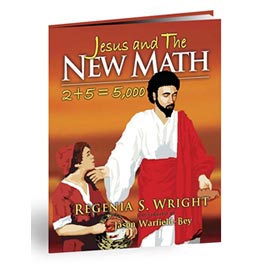
2 + 2 = Jesus?

I think I understand the author's intentions... but that is just an awful title.
I think I understand the author’s intentions… but that is just an awful title.

Whenever I talk about my passion for the integration of Christian faith and the study of mathematics, the typical response is one of confusion. I can tell immediately that the listener is going to a place in their head where they envision the arithmetic lessons from elementary school somehow combined with the Bible stories from Sunday school – where the answer to every question (even 2+2) was always “Jesus.” When the listener can no longer contain the awkwardness of this mental image they eventually blurt out something along the lines of “How can 2 + 2 = 4 (or insert other trivial math problem) be Christian?”

Where the Question Originates

In a weird way this reasoning process and questioning makes sense to me. It makes sense because in my years as a math major/tutor/teacher/Ph.D. student whenever I might have occasion to interact with the general public on the issue of what it is I do, the one inquiring of me would typically respond by boasting in their ignorance – “You’re a math teacher? That’s great. I was never any good at math.” I’m quite certain no other profession receives that response. “You’re a dentist? That’s great. I never floss… You’re a lawyer? That’s great. I steal my neighbor’s newspaper everyday.” Um, I just met you, but thank you for that confession.

Though other professions may not get as blatant of a response as math teachers, I do think there is a social tendency of politeness to try and interact as best you can with whomever you may be speaking. This tendency causes people to revert back to their earliest point of connection with the subject at hand. So I may not be a dentist or a lawyer but I do have a shared experience of extra years of schooling for my profession (plus I also brush my teeth…and have seen a lot of “Law & Order.” A lot). For mathematics, the earliest shared experience that the average person feels comfortable reverting back to is arithmetic. Occasionally someone may have had calculus and remembers a bit even though they “don’t use it anymore” or someone may mention their experience of geometry (since that is one of the specific subjects that I teach). But in general, a common baseline across America is Math = Arithmetic.

I also believe, from my years of experience as a Christian, that the baseline across America is Christianity = something roughly akin to the rigid Sunday school classroom experience. Maybe this is because the number of those who leave the church as they grow older is heartbreakingly large, leading to a large population who only experienced Christianity as a child in Sunday school, I don’t know. Regardless I think there is a general impression that we Christians are those who read the Bible and believe that Jesus is the answer to every question, without question.  Who fed the 5,000? Jesus. Who saved the animals on the ark? Jesus. Who discovered America? Jesus. Perhaps this is an overly dramatized rendering of the general perception of Christians, but I do believe that by in large we aren’t viewed as very academically sound thinkers.

Put together the general societal experience with mathematics and the general societal view of Christianity and it isn’t hard to see where the question “How can 2 + 2 = 4 be Christian?” My ultimate response to this question is the following: it’s a bad question. You may have had a teacher that told you there are no bad questions. They were being polite. There are bad questions and there are two things specifically that make this a bad question: 1) it misunderstands the nature of mathematics as arithmetical calculations and 2) it misunderstands the gospel of Christianity as an intellectual endeavor.

Responding to the Question – Math is More than Calculations

With the dental/legal analogy above I have already hinted at the fallacy of associating an entire field of study with one basic component of that field. There is obviously more that goes into being a dentist than brushing teeth and there is obviously more that goes into being a lawyer than emulating Sam Waterston. I don’t think any honest person would believe that all there is to math is arithmetic. I do think that a lot of honest people believe that all there is to math is calculations – so like arithmetic, just more complicated.

This couldn’t be further from the truth. I am personally at a point as a student where I can’t remember the last math class I was in where they asked me to do calculations. And while I certainly do teach calculation methods to my high school students, I would be a horrible math teacher if my only concern for them was that they be able to memorize algorithms for completing calculations and solving equations. In fact, if that was the job description then I would be in a different profession (youngest general manager in Atlanta Braves history).

The vast majority of my time as a math teacher is spent trying to get students to think logically/rationally/creatively/independently – not algorithmically. I want them to be able to solve problems like sustainable energy, human trafficking or world hunger – problems whose solutions are not numbers that can be arrived at by way of a memorized formula or a graphing calculator. They need math to solve those problems and any other problem of importance that they can imagine. It is my job (and my passion) to get them to see that. Math is everywhere. Math is pervasively engrained in the both the physical and social structure of the world around us and it is equally as pervasive in rational processes of the human mind as we attempt to explore, understand, appreciate, and communicate knowledge of anything around us. Math is more than calculations.

Responding to the Question – Christianity is More than Thinking

Christianity is always more than thinking, but never less.

– Neil Tomba, Senior Pastor, Northwest Bible Church, Dallas, TX

Christianity is more than thinking; it is more than an intellectual endeavor. Christianity is more than learning new facts and being able to give new answers/responses to the questions of the world. The gospel is transformative of the whole person, not just of the intellect. Beyond that, the gospel of Jesus Christ is transformative of all of creation. When rightly understood, the gospel is a message about the redemption of something that is broken – broken people in a broken world – not just fixing our mental understanding to be correct. Sin is a horrible thing. It is much more than wrongful actions that we commit. Sin seeps down into our souls, perverting our intentions, decaying our physical body, and spreading through all humanity into the creation we were designed to oversee. Sin is not a thing that we do, sin is a thing that we are. Sin is pervasive.

“But where sin abounded, grace abounded all the more” (Romans 5:20). In other words, if sin is pervasive then grace is not only pervasive but also prevalent, permeating, extensive, all-inclusive, boundless, unrestricted, and inescapable. The gospel changes everything about us to the core of our being in more ways than we can even comprehend. To think that applying Christian faith to mathematics implies there is a “Christian” way of computing calculations and a “non-Christian” is to vastly underestimate the message of the gospel.

In sum, I believe my students need math to solve any meaningful problem that they will encounter in life. I also believe that the greatest problem that they will encounter is that of their own sin nature. It is only by experiencing the full grace of God that my students will ever have a proper perspective on themselves and the world around them. Through this lens, deep beyond the surface level of life, is where I hope my students will explore the integration of mathematics with their Christian faith.

I believe that this is how mathematics is done Christianly. Though it is admittedly a longer answer anyone I may be exchanging introductions with would be expecting. Maybe their response can now be “Um, I just met you, but thank you for that confession.”

UPDATE:

After posting I received a very insightful comment from Scott Eberle that I wanted to include within the body of the post in hopes that it would be seen by more people. My hope is that you can look forward to more contributions from Scott in the future. Enjoy.

The only part I wonder about is where you write “They need math to solve those problems.” Students certainly do need math to solve these very real and very Christian problems. I agree that it is right to have math courses center around these problems so that students never lose sight of the use of math in the real world. But I wonder if this does not also leave the impression that math is just a neutral tool for solving problems, that the Christian aspect resides in the use to which math is put rather than math itself.

I think I often separate in my mind pure math from applied math, though in practice they go hand in hand together. You give a beautiful description of how applied math is used to solve big issues that face us as Christians, but what about the math itself, the “pure” math that is actually used to solve “problems like sustainable energy, human trafficking or world hunger”? Does it have no intrinsic value until applied? Is it really neutral? I think this may be the thought left in many people’s minds even after they begin to see how math can be done from a Christian perspective—that math can be used Christianly, but that math itself is “non-Christian”.

Theologians from Augustine onward have affirmed that math comes directly from the mind of God. Mathematicians know that pure math is breathtakingly beautiful, amazingly logical, and unexpectedly useful in the real world. And we Christians know why. While we are teaching students to use math to fulfill God-given mandates, I think it would also be good to give students a glimpse of the divine origins, beauty, and nature of math itself.

Good Friday

(This is a copy if a previous post, but appropriate for today).

Courtesy of the Association of Christians in the Mathematical Sciences:

Salvador Dali’s painting Corpus Hypercubus (1954) is a fascinating visual representation of a mathematical metaphor for the theological mystery of crucifixion.

Corpus Hypercubus, Salvador Dali (1954)

Many people are familiar with how to unfold a cube from three dimensions into two as shown in the figures below. Some of the edges of the cube are separated so that the resulting collection of squares can be unfolded into a planar shape. The resulting diagram is called a “net” for the cube. The net is not unique but one common net resembles a cross.

Dali painted the cross in Corpus Hypercubus as a hypercube unfolded into 3-dimensional space. The hypercube consists of eight three-dimensional cubes for hyperfaces. Each hyperface is attached along a two-dimensional square face to six of the other hyperfaces. Just as one can unfold a cube, one can also unfold a hypercube into the shape depicted in Dali’s painting.

Using the analogy of a (mysterious) higher-dimensional object unfolded into three dimensions, Dali depicts the theological mystery of the crucifixion as an event that originated in a higher plane of existence and then unfolded into the world that we perceive. With this understanding, Corpus Hypercubus communicates the idea that though one can discuss the necessity of the Jesus’ sacrifice for salvation or study theological ramifications of the cross, one can only do so by analogy because human nature simply cannot perceive the scope of God’s plan.

More from the ACMS: