ACMS Summer Updates

To the ACMS membership,

Now that we are post-Memorial Day, we are less than a year away from seeing each other again at the 2024 Conference at Dordt University. As I look forward to that time, I pray that you all would find rest and rejuvenation this summer. This newsletter contains information regarding ACMS events and deadlines for the next calendar year. Please read through each topic. As always, please feel free to reach out to myself or other members of the board with any questions. 

Brabenec Lectureship

Many thanks are due to Russ Howell for serving as the inaugural Brabenec lecturer. This past year Russ gave talks at Huntington, Taylor, Indiana Wesleyan, and Lee University. You can find a link to the video of Russ’s talk at Huntington on the ACMS website main page.

The board is pleased to announce that the Brabenec Lecturer for the 2023-24 academic year is Derek Schuurman. You can follow this link to Derek’s personal website to read about his background and academic work. Derek has made immense contributions to the integration of faith and learning in computer science and we are thrilled to have him as the next Brabenec Lecturer. 

Applications to Host the Brabenec Lecture Series

If your institution is interested in hosting Derek this next academic year, you can apply hereThe deadline to apply to host is July 17th. The board hopes to announce the host institutions by August 1st. 

APU Conference Proceedings

The ACMS Journal and Proceedings from the APU conference is now available here. Thanks are once again due to Russ Howell for serving as editor. As a reminder, you can find previous ACMS journals and conference proceedings at pillars.taylor.edu/acms/.

Dordt Conference 2024

Details for the Dort 2024 Conference are taking shape. Keep your calendars marked for the week of May 27th, 2024. Confirmed plenary speakers include:

We are working to add one more speaker to the lineup, so stay tuned. 

We would now like to solicit proposals for pre-conference workshops. If you have an idea for a workshop, please use this form to submit an abstract. The board will review the proposals on a rolling basis with the goal of having the pre-conference workshops finalized by September. 

Call for talk proposals will go out in August.

Proposals to Host the 2026 Conference

The application is open for schools to host the 2026 ACMS conference. This summer would be an excellent time for you and other members of your institution to complete the application form. Schools that are east (broadly speaking) will be given priority. 

Finally, I’ll close with a reminder about our newly created ACMS Discussions Google Group. This could be a great way to share information and continue discussions throughout the summer. 

Happy summer everyone. 
Micah 6:8 Mathematics – ACMS 2022 Conference Talk

Abstract:

This presentation will unpack how the discipline of mathematics, rightly understood in a Christian context, equips students to do justice, love kindness, and walk in humility with God (Micah 6:8). This presentation will expand on the experience of Regents School of Austin in shaping the philosophy of its mathematics program around several key works: Math for Human Flourishing, Citizen Math, Building Thinking Classrooms, and Beauty for Truth’s Sake. Several practical examples from the Regents curriculum will be shared to demonstrate how the ideal of integrating faith and Christian service into the math classroom becomes a reality that is meaningful for students.

Presentation:

Link to presentation slides

Regents Documents:

Regents Math Department Philosophy

Regents Math Catechism (blog post on catechism in the classroom) (videos of students reciting)

Resources:

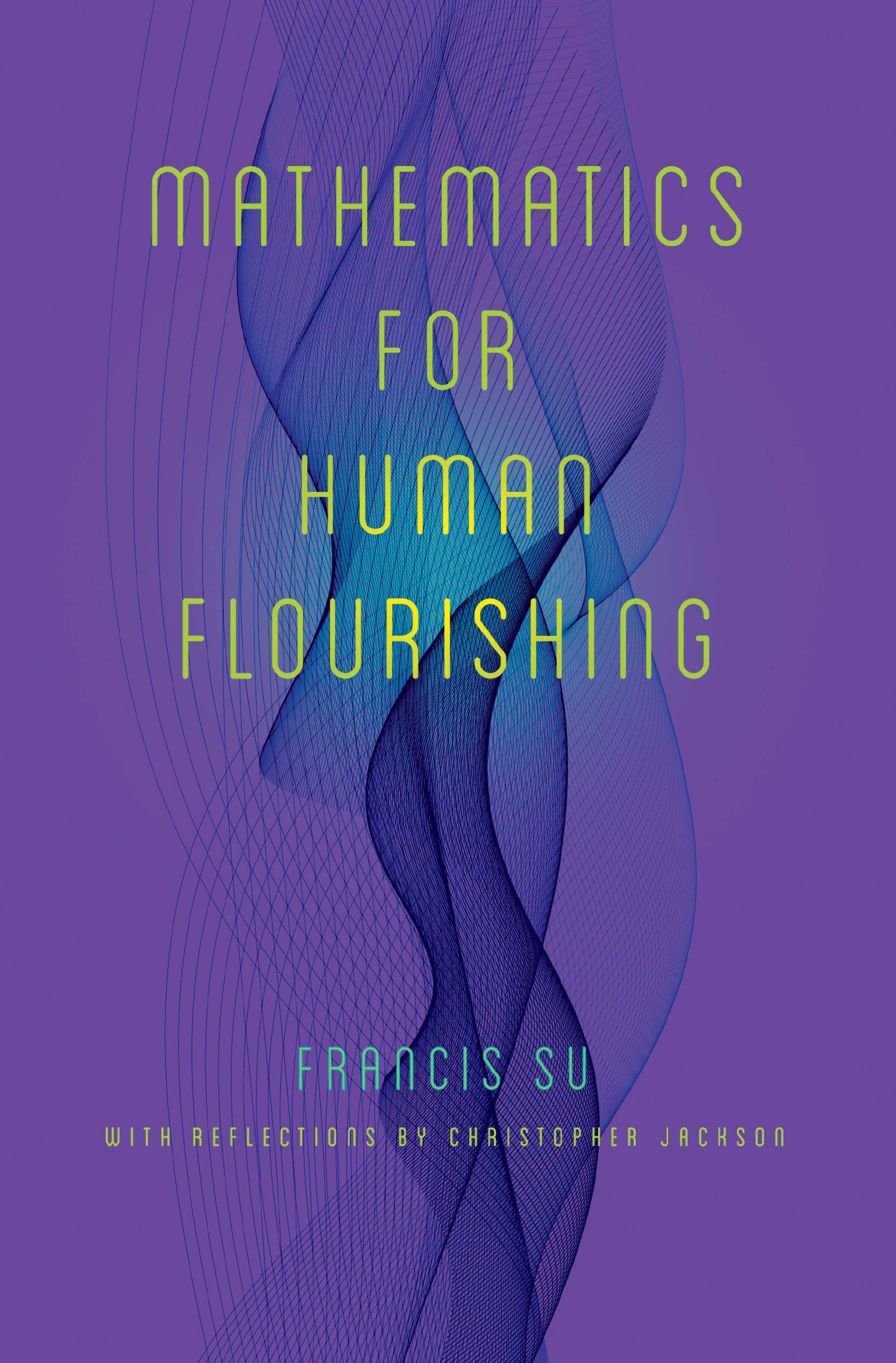
Mathematics for Human Flourishing

Building Thinking Classrooms

Citizen Math

Beauty for Truth’s Sake

Something They Will Never Forget

Cultivating Soulful Mathematicians

UPDATE (4/1/20): To ensure the health and safety of both attendees and speakers during the coronavirus pandemic the difficult decision has been made to cancel the Cultivating Soulful Mathematicians Conference for this summer. Be on the lookout for a rescheduled conference in the summer of 2021. 

It has been a while since I have posted here (and it seems like I start more and more posts with that caveat). In the past year I have been blessed with my dream job of overseeing the K-12 mathematics program at a Christian school. I have spent a lot of time on vertical alignment, evaluating our curriculum and proposing changes, teacher training, and running a social media public relations campaign to increase our parent community’s understanding of what we do in our math program. The work has been good and rewarding, but also time consuming.

Oh, and in my “spare time” I have been working with some amazing colleagues and brothers in Christ to launch a math conference. That is what I would like to share with you today.

The name of the conference is “Cultivating Soulful Mathematicians” and information along with registration details can be found here. Francis Su will be the keynote speaker and every conference participant will receive a copy of his forthcoming book Mathematics for Human Flourishing.

Where does the name of the conference come from?

Well, my colleagues and I had kicked around a few ideas including “math for human flourishing,” “cultivating mathematical affections” (if you’ve read anything on this site then you can guess who suggested this theme), and “math class as soul craft” (an homage to the book Shop Class as Soul Craft). These themes were close to what we were aiming for but none were perfect fits. Then I began reading the book Where Wisdom may be Found: the Eternal Purpose of Christian Higher Education. I have included this book on the “Resource” page and hope to post a review of it at some point (in my “spare time”).

I began reading this book because one chapter is entitled “The Joy of Mathematics.” While I thoroughly enjoyed that chapter it was actually another chapter that motivated this conference theme: “Becoming a Soulful Wordsmith.” Here is the apt excerpt:

Liberal arts learning has always emphasized the importance of discovering who we truly are, over and above acquiring practical skills that can be applied in a work context. Students who are dedicated to liberal arts learning, from a Christian perspective, will develop an enduring interest in their souls, especially as they are enlivened by the living Word Jesus. To be soulful, biblically speaking, is to be aware of, and participate in, the transforming work of redemption by the Lord who promises to bring life, and bring it “more abundantly” (John 10:10). This is the Christian version of seeking “the good life,” which is the prime directive of secular liberal arts.

This struck a chord with me as it seems to touch on all of the previous themes we had thrown out there but not been satisfied with.

  • “cultivating mathematical affections” – discovering who we truly are, over and above acquiring practical skills that can be applied in a work context
  • “math class as soul craft” – developing an enduring interest in their souls
  • “math for human flourishing” – the Christian version of seeking “the good life,” which is the prime directive of secular liberal arts

What do we hope to achieve at this conference?

From the conference description: Teaching and learning mathematics orients ourselves and our students in a posture of wonder and gratitude, with a desire to worship God and serve one another in community. Mathematics is the language through which we describe the natural world and give expression to our exploration of even the most abstract relationships between shapes and numbers. This is realized as teachers carefully attend to students through instructional practices and deliberate classroom liturgies that draw students into enduring understandings. In our time together, participants will assume the role of students as they exercise their mathematical imagination, experience collaborative problem solving that is both accessible and challenging, and communicate meaningful connections between multiple representations of ideas. Teachers will be led through the process of backward design, development of provocative anchor tasks, and composition of assessments that reflect the chief aim of cultivating mathematical affections.

I hope you’ll consider attending or at least spreading the word to others.