The proceedings for the 2011 ACMS Conference at Westmont College are now available. This includes the schedule, list of abstracts, and summaries for all the talks.
There were a lot of great thoughts from a lot of great presenters. Enjoy.
The proceedings for the 2011 ACMS Conference at Westmont College are now available. This includes the schedule, list of abstracts, and summaries for all the talks.
There were a lot of great thoughts from a lot of great presenters. Enjoy.
I attended my first ACMS conference a few weeks ago at Westmont College in Santa Barbara, CA. I had a blast. I was able to present a paper, hear some great talks, and meet/fellowship with some great mathematicians who are solid believers in their faith. Too many great moments to share them all, but here are a few thoughts/quotes from the meetings:
 1. Texas needs to find a way to hijack California’s weather.
2. I have a great, beautiful, supportive, loving wife, and for this I am extremely blessed.
3. Art Benjamin is an entertaining teacher which is great to see in a mathematician. I’m sure people who have always hated the subject pay more attention when he is talking.
4. My magic square (Hint on what makes it so magic, 35):

5. He left his Father’s throne above So free, so infinite his grace! Emptied himself of all but love, And bled for Adam’s helpless race. ‘Tis mercy all, immense and free, For O my God, it found out me!
6. This earth belongs to God…
7. It is amazing to see how such different branches of mathematics can work together in ways never before thought. The example of combinatorial proofs of trigonometric identities was very cool to see.
8. Building on 6, why would we want to find different proofs for stuff we have already proved? “The proofs we have may establish truth, but they don’t necessarily establish insight.” This quote sticks with me as an educator.
9. 2, 3, 5, 8, who do we appreciate? Fibonacci!
10. Paper by Jason Wilson of Biola University: The Divine mind is impressed on the world such that the secular mind recognizes it and seeks to use it for gain. The Biblical mind not only obtains a deeper understanding of it but is even beckoned to become a partaker of it. Notice the juxtaposition of wisdom in Proverbs 8 with Jesus in John 1:1-14.
11. I was pushed to really consider for what purposes I would use a math biography in my lessons – just to present ideas, or to bring out more in the life of the mathematician/believer.
12. The more we are able to recognize our weakness, the more we are able to practice true dependence on God.
13. Great site: the Mathematics Genealogy Project
14. Glenn Van Brummelen, Quest University, has a great self-described title: Mathematical Anthropologist. Need to read The Mathematics of the Heavens and the Earth.
15. In different cultures the goal wasn’t to convince you of the proof mathematically, but rather to give you different types of understanding – there was no “naturally” correct way of doing things.
16. When missionaries entered these cultures they brought their math with them, thinking a way to convert people to Christianity was to show them the superiority and power of the math and science that Christianity produced… perhaps this is not the best way of thinking 🙂
17. Are mathematical ideas universal, as evidenced in different cultures reaching similar results independently? Or is this just evidence of our shared humanity?
18. Mike Stob of Calvin College convinced me I need to use “R” next year with my AP Stat class.
19. Talithia Williams of Harvey Mudd College gave a great (and much needed) presentation on making students aware of the misapplication of statistics in American life. A great example is in how pharmaceuticals are now peddled directly to the consumer, yet since we don’t know the actual data from the studies, it is hard to know when to take a risk on certain medication. This might make a good stats-and-society project for students.
20. “Who we are mathematically is not who we always were, or who we will always be.”
21. Often models we use in the classroom are not accurately presenting the ways the material was learned at the time of its inception.
22. Some cultures preserved their mathematical ideas and passed them down in poems and songs – I’ve found these to be effective teaching tools in the past, I need more of them.
23. Wigner – in looking at the effectiveness of mathematics, the miracle is not in the connection of math with science, but in the math itself.
24. It was great to hear Bob Brabenec of Wheaton give a talk. I’ve mentioned his work on this blog on more than one occasion. It was interesting to hear him delineate between doing philosophy of mathematics and thinking philosophically about mathematics. I myself have realized that I probably fit more in the latter category.
25. Mark Colgan of Taylor University gave a great talk on encouraging students to connect topics in Calculus with Biblical ideas by using weekly reflection papers. Though I may not follow his model exactly, I very much like the idea of introducing reflection papers into my curriculum.
26. David Stucki of Otterbeing University gave a great talk on teaching students the concept of infinity. I wish I could have focused on it more and taken more notes, but my talk was right after his. He did list some great resources which I hope to contact him about and share here.
27. Mathematics Through the Eyes of Faith is due out in August. I got an advanced copy of it and it looks great! It really addresses some of the key issues in Mathematics and the Christian Faith. Do mathematical concepts point beyond themselves to a higher reality? Can the idea of chance be reconciled with God’s sovereignty? How do we account for mathematics being so effective in describing the world? How does giving people the capacity to do mathematics fit into God’s purposes for humanity? Should be a great read. I look forward to reviewing it.
28. In trying to describe the beauty and wonder of mathematics to a broader audience it is very difficult to “describe the mathematics simply without simplifying the problem,” which is where the beauty lies.
29. There was something wonderful about being in a room full of academic colleagues and being able to all worship the Lord together.
30. I hope I don’t have to wait two more years to this again.

Therefore no one is to act as your judge in regard to food or drink or in respect to a festival or a new moon or a Sabbath day– things which are a mere shadow of what is to come; but the substance (literally body) belongs to Christ.
Colossians 2:16-17
For the Law, since it has only a shadow of the good things to come and not the very form (literally image) of things, can never, by the same sacrifices which they offer continually year by year, make perfect those who draw near.
Hebrews 10:1
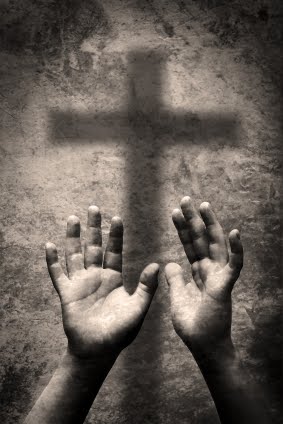
I love the Biblical imagery of a “shadow.” The Greek word translated as “shadow” (σκιά, pronounced skia) shows up three times in the New Testament in a metaphorical sense. Two of the three verses are listed above and we will get to the third (and perhaps most interesting use for the purposes of this blog) shortly. The word σκιά can be translated as “shadow” or “foreshadow” or even “reflection.” There are several examples outside of the Bible of the word being used to refer to an image as seen in water – in which case the translation of “reflection” might be more apt. In all metaphorical cases, including the three instances in the New Testament, σκιά can generally be taken to mean: “a mere representation of something real” (BDAG).
One thing about shadows, they need a body to make them (Col. 2:17). Reflections need an original, or true, image (Heb. 10:1). In both passages listed above, Paul and the author of Hebrews are not claiming that the Mosaic Law was bad. The Law was in fact very good, but incomplete. In as much as a person’s shadow is not a complete description of who they are since it only provides an outline of their form, the Law was not a perfect description of how humanity is to relate to God, but it did give an outline, an idea. The Law was meant to point toward Christ. It provided only a boundary of holiness in which Israel was to operate in order to be a distinct and set-apart people of God. The Law was the shadow. Christ is the body. The Scriptures above demonstrate that since Christ has been revealed we no longer live in a shadow of unreachable standards, but instead we are to be intimately related with God in person: Jesus Christ.
So what does this have to do with math?
This brings me to the third passage in which σκιά is used metaphorically:
For every high priest is appointed to offer both gifts and sacrifices; so it is necessary that this high priest (Christ) also have something to offer. Now if He were on earth, He would not be a priest at all, since there are those who offer the gifts according to the Law; who serve a copy and shadow of the heavenly things, just as Moses was warned by God when he was about to erect the tabernacle; for, “See,” He says, “that you make all things according to the pattern which was shown you on the mountain.”
Hebrews 8:5
This passage references Exodus 25 – an entire chapter (plus) devoted to instructions for constructing the Tabernacle. Whereas the two passages we began with seemed to describe the Law as a shadow of Christ, Hebrews 8:5 seems to take that imagery a step further and claim that the physical Tabernacle is a shadow of the heavenly place of worship in the presence of God. What I find interesting is that the construction of Tabernacle is at its root a mathematical process. Exodus 25 is filled with detailed dimensions and lists for construction. When God wanted to teach Israel what He was like and How He was to be worshiped, the language of mathematics played a vital role in communicating that message.
Maybe there is something in this imagery of “shadow” that can help us understand the place of mathematics in this world – both its importance and its limitations. Is the language of mathematics simply a “shadow” of our divine understanding to come? While my thoughts are just beginning on this issue, initially my answer would be yes.

In pursuing this further, it is comforting to know that I am not the only one who believes mathematics can be best understood with this “shadow” imagery. The following is taken from the book Thinking About Mathematics, by Stewart Shapiro:
“At the end of Book 6 of the Republic Plato gives a metaphor of a divided line (see Fig. 3.1). The world of Becoming is on the bottom and the world of Being on the top (with the Form of Good on top of everything). Each part of the line is again divided. The world of becoming is divided into the realm of physical objects on top and reflections of those (e.g. in water) on the bottom. The world of Being is divided into the Forms on top and the objects of mathematics on the bottom. This suggests that physical objects are ‘reflections’ of mathematical objects which, in turn, are ‘reflections’ of Forms” (p. 53-54).
In some sense Plato saw mathematics as reflecting the Forms, or the true world of knowledge.
Plato described Forms such as the Good, the Beautiful, the True, the Just. Today we as Christians can understand these Forms as being attributes and expressions of the divine nature. God’s nature defines goodness, beauty, truth, justice. As we pursue study of the divine nature, in some way mathematics provides a “shadow” (an outline) that guides us.
What exactly that means, I’m not yet certain. I just found this imagery very interesting in light of Scripture and I will be pursuing this line of thinking further in the future. For now I leave it to you to do with this what you will. I would love to hear your comments. As we wrestle with this topic we can be comforted that while we may not understand the shadow completely, there is a true body to whom we relate and who we will one day see.
For now we see (a reflection) in a mirror dimly, but then face to face; now I know in part, but then I will know fully…
1 Corinthians 13:12 (object added)
And Lord, haste the day when my faith shall be sight,
The clouds be rolled back as a scroll;
The trump shall resound, and the Lord shall descend,
Even so, it is well with my soul.
 GOD & MATH: Thinking Christianly About Math Education