Christian Mathematicians – Cauchy

By Steve Bishop

(Disclaimer: The views expressed by guest authors do not necessarily reflect those of GodandMath.com. Guest articles are sought after for the purpose of bringing more diverse viewpoints to the topics of mathematics and theology. The point is to foster discussion. To this end respectful and constructive comments are highly encouraged.)

 Augustin Louis Cauchy (1789-1857)

“The life of Augustin Cauchy … offers a perfect model of Christian virtue, as well as of supreme intellectual activity.  He was one of the most eminent mathematicians that France has produced, and his nobility of character was not less remarkable than his genius for mathematics,” wrote the French physicist Jean Baptiste Biot (1774-1862) cited in Kneller (1911, p. 57).

Cauchy declared: “I am a Christian, that is to say, I believe in the divinity of Jesus Christ …” Kneller (1911, p. 43).

Augustin Louis Cauchy was born in Paris in 1789 during the French Revolution. His family moved for safety to Arcueil. He was a sickly child and suffered from malnourishment. In Aucueil he met Laplace and Lagrange. On the family’s return to Paris he enrolled as a student at the Ecole Polytechnique, where he studied engineering.

From 1810 he served as an engineer in Napoleon’s army. He had to give up this role due to ill health and sought an academic job, without success, in Paris. In 1816 he became professor of the Ecole Polythechnique and was elected to the French Academy of Sciences. At the Ecole Polytechnique he attempted to reform the mathematics syllabus.

In 1825 he set up his own mathematical journal Exercises des Mathematiques.

As an ardent Catholic and royalist, Charles X’s abdication in 1830 meant Cauchy lost his prestigious positions and following a self-imposed exile he took up a professorship in Turin. He later tutored Charles X’s son in Prague.

In 1838 he was able to return once again to France and to the Ecole Polytechnique. He then took up a position in 1848 at the Sorbonne. He died in 1857 from a fever.

Cauchy had a powerful influence over the development of complex analysis. Ioan James describes him as “the greatest French mathematician of his time.” (James, 2002, p. 81)
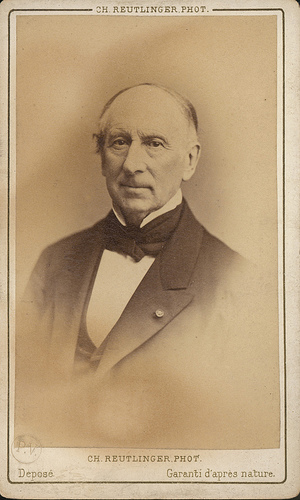
There are a number of mathematical ideas named after him including: The Cauchy-Riemann equations, Cauchy integral theorem, Cauchy integral formula, determinant, distribution, horizon, problem, product, sequence, surface, and at least two theorems.

References

Kneller SJ, Karl Alois. 1911. Christianity and the Leaders of Modern Science: A Contribution to the History of Culture in the Nineteenth Century London: B. Herder.

James, Ioan. 2002. Remarkable Mathematicians: From Euler to von Neumann. Cambridge University Press, 2002

Biographies

Belhoste, Bruno. 1991. Augustin-Louis Cauchy: A Biography. New York: Springer.

Steve Bishop is the compiler of A Bibliography for a Christian Approach to Mathematics and the author of several articles on the relationship between faith and math. Look for future posts from him in this series on Christian Mathematicians.

Previous Entries in this Series:

Christian Mathematicians – Babbage

By Steve Bishop

(Disclaimer: The views expressed by guest authors do not necessarily reflect those of GodandMath.com. Guest articles are sought after for the purpose of bringing more diverse viewpoints to the topics of mathematics and theology. The point is to foster discussion. To this end respectful and constructive comments are highly encouraged.)

Charles Babbage (1791-1871)

Charles Babbage was the son of Benjamin and Betsy Plumleigh Babbage. He was born in London. But soon moved to South West England. His father was warden of a church in Teignmouth, Devon. His grandfather was the major of Totnes, Devon. They were a rich family and so Charles was educated at top schools. He was a sickly boy and this interrupted some of his schooling. At one small private school he taught himself mathematics from books in the large school library.

In 1810 he went to study at Trinity College Cambridge, where he, Herschel and others formed the Analytical Society. Babbage later transferred to Peterhouse College, Cambridge.

When he got married to Georgina Whitmore in 1814 at Teignmouth, Babbage contemplated ‘going into the Church’. He didn’t because, as he wrote to Hershel: ‘this will not accord sufficient propriety (for a curacy is all I should get).’!

Babbage is best known for his calculating machines; the difference machine and the analytical machine. These machines paved the way for modern computing.

Babbage’s analytical machine – completed after Babbage’s death.

Babbage, in the Ninth Bridgewater Treatise (1837), wrote:

“The object of these pages … is to show that the power and knowledge of the great Creator of matter and mind are unlimited.”

In it he describes God as a great programmer.

On miracles, he wrote (1837):

“The object of the present chapter [VIII Argument from laws intermitting on the nature of miracles] is to show that miracles are not deviations from laws assigned by the Almighty for the government of matter and mind; but that they are the exact fulfillment of much more extensive laws than those we suppose to exist.”

He draws parallels with the operation of his calculating machine and suggests that

“… these speculations have led to a more exalted view of the great Author of the universe than we have yet possessed.”

Babbage also created a table of logarithms, contributed to cryptology. Invented the cow catcher – a frame to clear the railway tracks in front of trains – and was the Lucasian professor of mathematics at Cambridge University from 1828-1839. He helped found the Astronomical Society and the Statistical Society.

He died in London aged 79 on 18th October 1871. He is buried in Kelsal Green cemetery, London.

He was celebrated on a British first class stamp, to mark the 350th anniversary of the Royal Society

Selected publications

A Comparative View of the Various Institutions for the Assurance of Lives (1826)

Table of Logarithms of the Natural Numbers from 1 to 108, 000 (1827)

Reflections on the Decline of Science in England (1830)

On the Economy of Machinery and Manufactures (1832)

Ninth Bridgewater Treatise (1837) http://www.archive.org/stream/ninthbridgewate00babbgoog#page/n11/mode/2up

Passages from the Life of a Philosopher (1864)

Bibliography

Hyman, Anthony. 1982. Charles Babbage, Pioneer of the Computer. Princeton/ Oxford University Press.

Weblinks

http://history-computer.com/Babbage/Babbage.html

http://www.charlesbabbage.net/

Obituary http://www-history.mcs.st-and.ac.uk/Obits/Babbage.html

A project to build Babbage’s analytical machine http://plan28.org/

Steve Bishop is the compiler of A Bibliography for a Christian Approach to Mathematics and the author of several articles on the relationship between faith and math. Look for future posts from him in this series on Christian Mathematicians.

Previous Entries in this Series:

Christian Mathematicians – Hamilton

By Steve Bishop

(Disclaimer: The views expressed by guest authors do not necessarily reflect those of GodandMath.com. Guest articles are sought after for the purpose of bringing more diverse viewpoints to the topics of mathematics and theology. The point is to foster discussion. To this end respectful and constructive comments are highly encouraged.)

Sir William Rowan Hamilton (1805-1865) 

 Hamilton has been described as ‘one of the most imaginative mathematicians of the nineteenth century’ (Hankins ) and as a ‘mathematical genius’  (Wilkins, 2005). Hamilton was born in 1805 in Dublin, the son of a solicitor. He lived with his clergyman uncle James from the age of three.

He studied at Trinity College Dublin where he excelled. Before going to Trinity he had read many mathematical papers and had even spotted a mistake, which he rectified, in some of Laplace’s work. There he did work on optics. He then became the Royal Astronomer of Ireland. He remained the Royal Astronomer until his death in 1865.

In an obituary De Morgan (1866) had this to say of Hamilton:

In the case of Hamilton there is no occasion to state anything but the simple fact, known to all his intimates, that he was in private profession, as in public, a Christian, a lover of the Bible, an orthodox and attached member of the Established Church, though of the most liberal feelings on all points. He had some disposition towards the life of a clergyman, but preferred to keep himself free to devote all his time to science: he was offered ordination by two bishops.

And Charles Pritchard (1866) in another obituary wrote:

This memoir would be incomplete if we did not add, that our deceased member, together with the character of a scholar, a poet, a metaphysician, and a great analyst, combined with that of a kind-hearted, simple-minded Christian gentleman; we say the latter because Sir William Hamilton was too sincere a man ever to disguise, though too diffident to obtrude, his profound conviction of the truth of revealed religion.

Gene Chase writes of the link between Hamilton’s faith and his mathematics:

In Hamilton’s Calvinistic[1] theology, as in that of his Scottish friend and pupil Clerk Maxwell, God is the creator both of the universe and of the laws governing it. This means that the lawful relations among material objects are as real as the objects themselves. As a Christian, Hamilton was convinced that the stamp of God is on nature everywhere. He expected a Triune God to leave evidence of the Trinity on everything from three-dimensional space in geometry to an algebra involving triples of numbers. This “metaphysical drive,” in the words of Thomas Hankins, his best twentieth-century biographer, “held him to the task” of looking for a generalization of complex numbers to triples.”

It was this search for triples that led him to the discovery of quaternions. This occurred when out walking with his wife, he then carved the formula on the Broome Bridge – there is now a plaque on a bridge marking the spot:

His formula is even celebrated on a Irish stamp:

He was knighted in 1835. Other contributions made by Hamilton include work in optics, dynamics, complex numbers and a board game ‘icosian’ based on his work in graph theory.


 He gave his name to the Cayley-Hamilton theorem and to the Hamiltonian.

References:

Chase, Gene B. 1996. ‘Has Christian theology furthered mathematics‘ In Facets of Faith and Science vol 2: The Role of Beliefs in Mathematics and the Natural Sciences: An Augustinian Perspective. Jitse M. van der Meer (ed.) University Press of America/ Pascal Centre for Advanced Studies: Lanham/ Ancaster.

De Morgan, Augustus. 1866 ‘Sir W. R. Hamilton’ Gentleman’s Magazine and Historical Review, vol. I. (new series) : 128-134.

Hankins, Thomas L. 1980. Sir William Rowan Hamilton.  John Hopkins University Press.

Pritchard, Charles 1866. William Rowan Hamilton. Monthly Notices of the Royal Astronomical Society 26, 109-118.

Wilkins, David R. 2005.  ‘William Rowan Hamilton: mathematical genius’ Physics World (Aug), 33-36.


[1] It seems Chase may be mistaken in assuming that Hamilton’s faith was Calvinistic. However, his sister certainly was see e.g. E. P. Graves, 1889,  Life of Sir William Rowan Hamilton p. 112.

Steve Bishop is the compiler of A Bibliography for a Christian Approach to Mathematics and the author of several articles on the relationship between faith and math. Look for future posts from him in this series on Christian Mathematicians.

Previous Entries in this Series: