Math in Process: Critiquing the Process (Revelation and the Trinity)

Disclaimer: the author of this post does not in any way support the views of process theology or believe that its views can legitimately be considered thinking Christianly. The purpose of this post is to summarize these views in order to critique them.

Previous entries in this series:

Math in Process

Math in Process: An Introduction

Math in Process: Process Theology 101

Math in Process: The Influence of Mathematics on Process Theology

Many critiques have been leveled against process theology. One that I have found to be particularly well written comes from Bruce Demarest entitled “The Process Reduction of Jesus and the Trinity,” in Process Theology (ed. Ronald H. Nash, Grand Rapids: Baker Book House, 1987). Many of the points I make below can be attributed to the framework of Demarest’s argument.

In general, the criticisms of process theology have focused on the process theologians’ redefinition of divine omniscience. The question that began this series of posts, “Do mathematicians create new mathematical objects that are surprising to God?” appears to be rooted in the discussion of God’s knowledge. Extensive work has been done in the area of divine foreknowledge producing responses to the tension that exists between God’s omniscience, omnipotence and human freedom which keep orthodox Christians from necessarily making a move to process theology. One such option is to recognize God’s existence outside of time. Therefore to speak of His future knowledge is a very different thing than to speak of human future knowledge.[1]

It is my contention, however, that the conversation need not go that far for our purposes. In other words it is not simply because viable, orthodox, philosophical arguments exist that we should refuse to accept process theology and a process perspective of Christian mathematics. Rather it is because process theology greatly damages foundational Christian doctrines that it cannot be accepted.

If we are to maintain an orthodox faith and practice the discipline of mathematics in a distinctly Christian way there are core tenets that must be maintained. Philosophical and mathematical results that develop from (or necessarily involve) the forfeiture of any of these tenets cannot be accepted. That is not to say that they cannot be discussed, so long as that discussion brings us back to the core beliefs that Scripture is authoritative, God is Trinity, and Jesus as the God-man was crucified and resurrected as atonement for our sins. To be clear that process theology simply does give us a viable option in these doctrines, the implications of process thought in each will now be briefly discussed.

Revelation and the Trinity

Process thought accepts the notion that God is revealed through scripture in some sense, but because of the evolving nature of any tradition, process theology allows for considerable freedom on the part of the interpreter. In process theology, reference to the historical Jesus or the apostolic tradition is only one way that a critical element can be brought to bear on the question of the authority of Scripture.[2]

Rather than viewing the Bible through this traditionally orthodox lens, process theologians prefer to approach the Scripture from the viewpoint of scientific modernity.[3] This excludes a belief in miracles (supernatural intrusions by God into the natural order). This is discarded for a trust in the evidence of science that all events have a natural sequence of cause and effect in the evolutionary process. The process school comes to the theological task with a low view of scripture – modern study precludes accepting all that is written therein as true. If God does not supernaturally intrude from without the natural order, divine revelation is by definition excluded.

With the elimination of divine revelation, and along with it the authority of scripture, the door is open to modify any other doctrine in a way we see fit. That a doctrine appears in the Bible or that it was faithfully upheld by the historic Christian church provides no basis for its acceptance by modern, empirically minded process thinkers. This conclusion is obviously unacceptable to historically orthodox Christians.

Orthodox View of Trinity

Once the Bible (and the creeds) have been discarded, the doctrine of God as Trinity is easily modified. The doctrine of Trinity has historically been defined as God existing as one essence in three persons. Whitehead’s identification of person with substance led him to conclude that the Christian doctrine of trinity is really a crude tri-theism. Therefore the term person, in process theology, was viewed as a mode of activity (an abstract quality) of a single concrete subject. This means that process theology upholds a tri-unity of abstract and impersonal principles.[4] The subject of Jesus cannot be identified with the second member of the Trinity and likewise, the subject of the Holy Spirit cannot be identified with the third member of the Trinity.[5] These parts of the Trinity are viewed as abstract and impersonal principles in God’s primordial (or unchanging) nature. While they may interact with the world through God’s consequent (or changing) nature (since his consequent nature by definition includes his primordial nature – if you are confused, don’t worry, I am too), the process construction of Trinity is decidedly inferior to a dynamic society of three conscious, active, and loving persons.

In summary it would seem that the process view of trinity is defined in terms of functionality rather than objectivity. By that I mean the process view sees trinity as a reference to the unity of the three different functions of God. If this interpretation is true then process theology can be filed under the heresy of modalism – the view that there is one God who manifests himself in three different modes: father, son, and holy spirit. Even if this interpretation of the process view is incorrect, at the very least it is clear that the process definition detracts from the orthodox Christian definition (given below) in order to resolve their philosophical tensions and their emphasis on becoming over being.

The Christian doctrine of trinity, thus viewed as three related persons in one substantial unity, provides demonstration of the classical philosophical problems of the relation of the one to the many and of being to becoming.[6] It is unacceptable for Christians to dismantle the traditional view of Trinity in order to philosophically resolve these lingering tensions.

More on this in the closing post of this series in which I lay the groundwork for a distinctly Christian foundation for mathematics.

Coming Up Next:

Critiquing the Process View of The Person and Work of Jesus Christ

Let us close this post with a clear statement against the process view of trinity: the Athanasian Creed.

Whosoever will be saved, before all things it is necessary that he hold the catholic faith, which except everyone shall have kept whole and undefiled, without doubt he will perish eternally.  Now the catholic faith is this: We worship one God in Trinity and Trinity in Unity, neither confounding the Persons nor dividing the substance.

For there is one Person of the Father, another of the Son, and another of the Holy Spirit.  But the Godhead of the Father, of the Son, and of the Holy Spirit, is one, the Glory equal, the Majesty co-eternal.  Such as the Father is, such is the Son, and such is the Holy Spirit; the Father is uncreated, the Son is uncreated, and the Holy Spirit is uncreated; the Father is infinite, the Son is infinite, and the Holy Spirit is infinite; the Father is eternal, the Son is eternal, and the Holy Spirit is eternal.  And yet there are not three eternals but one eternal, as also not three infinites, nor three uncreateds, but one uncreated and one infinite.

So, likewise, the Father is almighty, the Son almighty, and the Holy Spirit almighty; and yet not three almighties but one almighty.  So the Father is God, the Son God, and the Holy Spirit God; and yet there are not three Gods but one God.  So the Father is Lord, the Son Lord, and the Holy Spirit Lord; and yet not three Lords but one Lord.  For like as we are compelled by Christian truth to acknowledge every Person by Himself to be both God and Lord; so are we forbidden by the catholic religion to say, there be three Gods or three Lords.

The Father is made of none, neither created nor begotten.  The Son is of the Father alone, not made nor created but begotten.  The Holy Spirit is of the Father and the Son, not made nor created nor begotten but proceeding.  So there is one Father not three Fathers, one Son not three Sons, and one Holy Spirit not three Holy Spirits.

And in this Trinity there is nothing before or after, nothing greater or less, but the whole three Persons are coeternal and coequal.  So that in all things, as is aforesaid, the Trinity in Unity and the Unity in Trinity is to be worshipped.

He therefore who wills to be in a state of salvation, let him think thus of the Trinity.


[1] Jonathan L. Kvanvig, The Possibility of an All-Knowing God, (New York: St. Martin’s Press, 1986), 166..

[2] Russell Pregeant, “Scripture and Revelation,” In Handbook of Process Theology, ed. Jay McDaniel and Donna Bowman (St. Louis, MO: Chalice Press, 2006), 72.

[3] Bruce Demarest, “The Process Reduction of Jesus and the Trinity,” In Process Theology, ed. Ronald H. Nash (Grand Rapids: Baker Book House, 1987), 64.

[4] Ibid., 82.

[5] Ibid.

[6] Ibid.
Math in Process: The Influence of Mathematics on Process Theology

Disclaimer: the author of this post does not in any way support the views of process theology or believe that its views can legitimately be considered thinking Christianly. The purpose of this post is to summarize these views in order to critique them in a later posting.

Previous entries in this series:

Math in Process

Math in Process: An Introduction

Math in Process: Process Theology 101

Any traditionally conceived understanding of God has as a consequence, by and large, a platonic understanding of mathematics. That is to say that mathematical structures and relationships exist independently of man’s construction of them and are there existing in some way or some form to be discovered. If nothing else, this position is held because of the assumption that God knows and understands mathematical relations, thereby giving them some kind of existence independent of man’s creation.[1]

It has been proposed by process thinkers that this understanding of standard mathematics conditioned the doctrine of God’s immutability (the idea that God does not change in His nature). However, the development of nonstandard mathematics (namely Gödel’s Incompleteness Theorem) relaxed any restriction that required God to be strictly immutable (at least from the perspective of mathematics). So the process view of god as evolving is due in large part to mathematical developments.

Process theology, as developed by Whitehead and others, is therefore at least partly to be understood as an attempt at taking into account the new insights that resulted from Gödel’s publication.[2]

The Incompleteness Theorem

The most notable of Whitehead’s mathematical achievements was his work with Bertrand Russell on the Principia Mathematica. In this work Whitehead and Russell sought a unifying theory of mathematics based on logic and arithmetic – that is, they sought to secure all mathematical truths from a few assumptions of logic.

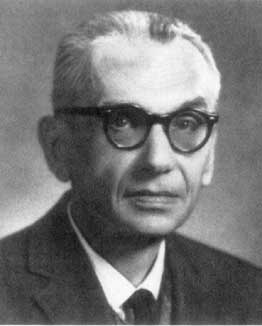
Kurt Gödel

Kurt Gödel’s Incompleteness Theorem was a damaging blow to Whitehead and Russell’s undertaking because it brought to light the limitations of both logic and arithmetic. Gödel’s theorem states that there is no set of consistent axioms, finite or infinite, from which all the true theorems of arithmetic can be derived.

For example, suppose we have axioms and find a theorem which does not follow from them. If we add the theorem to the axioms, then it will be derivable from them. Gödel showed that there still remain theorems true about arithmetic that cannot be derived from the augmented axioms. Furthermore, no matter how much you augment the axiom system, there still remain theorems that are true but cannot be derived from the axioms. This reveals that no rational system, or well-defined procedure, can ever present all truth, for then it would have to generate all the truths of arithmetic.[3]

Gödel’s theorem basically points out that the structures of knowing cannot all be formalized mathematically.

Implications for Process Theology

When translated to religion, this implies that there is no rational theology or philosophy by which we can understand the full truth about God or any other matter. In order to overcome the problem of the lack of a single all-encompassing formal system and to preserve the close relationship of mathematics and Logos (Christ as the Word) as well as the idea that God establishes and guarantees the unity of Logos, process theologians look for solutions in terms of plurality and increased potentiality.

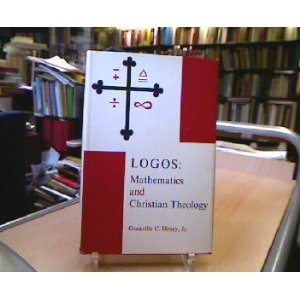
LOGOS: Mathematics and Christian Theology

In other words Process theologians modified the Christian view God in order to make Him fit better (in their opinion) with current mathematical breakthroughs. Because there is no system of truth that can be completely known (even by God supposedly), rather than see this as evidence that there is no God, process theologians began to view God himself as evolving: God currently knows all the truths that are know, and as new truths are discovered (or brought into being) God grows in His knowledge.

The major work that is available on the relationship of process theology and mathematics is LOGOS: Mathematics and Christian Theology, by Granville C. Henry (pictured left). More of his works are cited in the footnotes should you decide to pursue this topic in more detail than I have treated it with here. It should be noted that Henry writes from the perspective of a process thinker, so his use of the term “Christian” varies greatly with the way “Christian” has been defined on this site. Here are a few quotes from him on the matter at hand:

It may be appropriate to understand the realm (however understood) of mathematical relationships and hence of potential relationships as evolving – a rather radical departure from modal western philosophy or at least from its Christian adaptation.[4]

The new developments in mathematics seem to me to allow a better understanding of what it might mean for God to have the freedom to change the totality of potentials – both in terms of the structure of knowing and among human consciousness and in terms of objects known. This would mean that not only could man’s consciousness, as well as other structures of the world, evolve in ways hitherto unknown, and in ways impossible to know, but in ways that might be even a surprise to God – a surprise in the sense that the potential mathematical structure that could characterize (in part) such consciousness might not even be at present.[5]

Meshing Religion and Science

To the proponents of process theology it is the most important development in Christian thought since the first century. It is significant, they think, because the movement gives sophisticated moderns an intellectually and emotionally satisfying reinterpretation of Christianity that is compatible with late-twentieth century ways of thinking. Process theology allows you to be a “Christian” while maintaining your acceptance of mathematical and scientific theories that appear to contradict religious belief. Process theology was (and still is) seen as a systematic philosophical perspective that can solve problems in science and theology and relate them in an integrated manner.

Author’s Note: Though I will critique process thinking in greater detail later, I have to point out here that it is inappropriate to view science/reason and religion/faith as two opposing entities that need reconciliation. To take this position often leads to modifications in the definition of God simply for the sake of easing apparent tensions, as is the case with process theology.

Notice the similarities that Henry draws between a process perspective of science and a process perspective of religion:

The source of science is the real world that exists objectively on its own independently of our observation. We are part of this world and experience it. Science is understood in terms of its abstract, normally mathematical, structure which we create. Because this abstract structure is necessarily a partial description of the real world by virtue of the limitative theorems, theoretical science changes because of our refined experience in the world. We discover new things about the world that challenge old theory and precipitate new theory.

The source of religion is God, who exists objectively and independently of our observation. The religions of Judaism and Christianity claim that God reveals God’s self to humans and that humans experience God. A deposit of this revelation and human experience is contained in the Bible, which does not have mathematical or theoretical structure. It has historical, narrative, and mythological nature. Like scientific theory, classical theology which is an attempt to describe God by abstract logical structure, is also created by human invention. Although it seeks loyalty to the biblical revelation, it is necessarily only a partial description of any divine reality because of the limitative theorems. Theology changes as religious experience becomes richer or different.[6]

Recognizing how process theology views both the study of God and science as similarly evolving fields is key to understanding the development of the tenets of Scripture and revelation in process thought. The revelation contained in the Bible is seen as being necessarily incomplete. If the Bible is a systematic structure and it is inerrant, then it cannot be general. In other words, if the Bible is viewed as the set of axioms, then there are true theorems that cannot be arrived at by way of those axioms.

This means there are truths to which the Bible offers no insight. Rather than admitting this point, process theologians prefer to claim that the Bible is not a system but rather a window to the primary events of God’s causal and historical encounter with humankind.For a further elaboration on the process view of scripture, see the previous entry in this series.

Once the doctrine of Scripture has been modified, it is not hard to see how the modified doctrines of God, Christ, Sin, and Salvation follow.

Coming Up Next:

Critiquing the tenets of Process Theology


[1] Granville C. Henry, Jr., “Nonstandard Mathematics and a Doctrine of God,” Process Studies 3, no. 1 (Spring 1973): 9, 14.

[2] Teun Koetsier and Luc Bergmans, “Introduction,” In Mathematics and the Divine: A Historical Study, ed. Teun Koetsier and Luc Bergmans (Boston, MA: Elsevier, 2005), 36.

[3] Granville C. Henry, Jr., Christianity and the Images of Science, (Macon, GA: Smyth and Helwys Publishing, Inc., 1998), 164.

[4] Granville C. Henry, Jr., LOGOS: Mathematics and Christian Theology, (Cranbury, NJ: Associated University Presses, Inc., 1976), 112.

[5] Ibid., 11.

[6] Henry, Images, 216.

Math in Process: Process Theology 101

Disclaimer: the author of this post does not in any way support the views of process theology or believe that its views can legitimately be considered thinking Christianly. The purpose of this post is to summarize these views in order to critique them in a later posting.

Previous entries in this series:

Math in Process

Math in Process: An Introduction

Heraclitus by Johannes Moreelse

The ancient Greek philosopher Heraclitus once said: “You can never step into the same river twice.” If you place your foot in the river and then remove it, before you can step into the river again the current has pushed the water downstream and replaced it with new water, a new river if you will. This led Heraclitus to believe that the world is in a state of constant change. Everything is always in flux. Everything is always becoming. The problem with this claim is that it appears contradictory to our life experience. In life we have the appearance of constancy. Maybe I can’t step into the same river twice but I can, it seems, sit on the same couch twice. Heraclitus’ response to this was that Logos, or reason, is the principle of stability which gives the appearance of permanence.

The process philosophy that gained popularity in the mid 20th century is merely an extension of Heraclitus’ thought. It should be noted that in process philosophy and theology, like all schools of thought, there is not a uniform expression made by all of its adherents. While there do appear to be some core beliefs that are inherent in the label of “process,” there are also many different variations and unique expressions of process thought present in the work of different “process” thinkers. For the sake of space (and attention spans) I am going to narrow the scope to the doctrines of process faith as described in the work of Alfred North Whitehead and his contemporary disciples (the reasons for this will be made clear in the next post). Also, rather than evaluating process philosophy in general, I would like to focus on the applications of process thought that have attempted to label themselves as “Christian,” namely the process views of God, the Bible, and Jesus Christ.

The Process View of God

The god of process theology is primarily viewed as a god of love. Because events are given primacy over substance, how we define who we are and the world in which we live is necessarily stated in terms of the affects of the culminated events. God is no exception. In process thought divine love must mean being affected and changed by those who are loved.[1] God is thus affected by the world as well as affecting it. God has two natures as it were: one which effects change and a nature which experiences change.

Alfred North Whitehead

God envisages all the possibilities there are for the world. These he sorts into values, graded by their relevance to any particular situation and from them he presents each actual entity with an initial aim as it sets forth on its path of growth towards satisfaction.[2] However, the entity is free to accept, modify, or reject this divine influence. God only persuades, he never coerces. God carries on an action in the world through his capacity to persuade beings to listen to him and respond to his promptings – it is not possible for him to obligate them and he depends in part on their response and reaction.[3]

Process theology concentrates on the nature of God’s activity, redefining omnipotence in terms of persuasion and redefining omniscience as God’s perfect knowledge of both possibility and actuality without equating the two. In other words, God knows all things that are actual at present and all things that are possible in the future, but he does not know which possibilities will become actuality.

The Process View of the Bible

Process theologians accord an important place to Scripture. However, just as the omnipotence of God is defined in terms of persuasion, the authority of Scripture is viewed as dialogical and persuasive rather than unilateral and coercive. That is,  while process theology rejects the notion that the Bible speaks directly for God, they affirm its role in fostering a genuine encounter with God.

Revelation takes place in concrete, non-supernatural events and involves both divine activity as well as human reception. Revelation involves God’s self-disclosure but it is not the direction communication of propositional truth. Language is limited and ambiguous in its description of God. Thus process thought accepts the notion that God is in some sense revealed through scripture, but it also insists on interpretation in which readers are given considerable freedom in the shaping of meaning.  As Whitehead states:

The inspiration of religion lies in the history of religion. By this I mean that it is to be found in the primary expressions of the intuitions of the finest types of religious lives. The sources of religious belief are always growing, though some supreme expressions may lie in the past. Records of theses sources are not formulae. They elicit in us an intuitive response which pierces beyond dogma.[4]

So then, for process theology, no one belief is absolutely necessary for Christians to hold. Christianity is a process, a socio-historical movement. Such a movement certainly requires beliefs about its origins, about its nature and mission, and about the world, but these beliefs change and develop from generation to generation.

The Process View of Jesus Christ

For process theology, God’s being present or immanent in Jesus is a matter of historical fact, since God is believed to be immanent in every event whatsoever (this is also referred to as panentheism).[5] The question then arises, how do process theologians see Jesus as a unique individual? Jesus exhibits the optimal response to God’s calling. He was given a unique mission and he responded with great faithfulness.

In process theology the title of “Christ” refers to “Divine Reality Incarnate” (as opposed to “Messiah,” or “Anointed One”). Therefore “Christ” is not a label unique to Jesus of Nazareth; it can be applied to any person or instance in which “creative transformation” occurs.

A final point needs to be mentioned on the process understanding of evil. I group this under the doctrine of Christ because in traditional Christian theology, an understanding of human sin and spiritual lostness is vital for appreciating the salvation that is found through Christ and his work on the cross. Process theology denies the traditional doctrine of original sin – that due to the failure of Adam and Eve, the first humans, all of humanity has inherited a corrupt and sinful nature. Process theology cannot follow this view because process adherents believe that all humans are part of a great evolutionary process, and that God creates in and through this process.[6]

The crucifixion of Jesus in process theology is then not about a substitutionary atonement for sin. Process theologians prefer to believe that Jesus reveals who God is to us and for us. The cross does not represent vicarious sacrifice, but the revelation that God is with us even in our deepest pain. Jesus reveals that the sins of all humans affect God. At the crucifixion Jesus died because of sin, which is different than saying that Jesus died for sin.

Coming Up Next:

The important relationship that exists between process theology and a philosophy of mathematics


[1] Charles Hartshorne, A Natural Theology for Our Time, (La Salle, IL: Open Court, 1967), 75.

[2] Paul S. Fides, “Process Theology,” In The Blackwell Encyclopedia of Modern Christian Thought, ed. Alister E. McGrath (Oxford: Blackwell Publishers, 1993), 473.

[3] Andre Gounelle, “Process Theology,” In Encyclopedia of Christian Theology, Volume 3, ed. Jean-Yves Lacoste (New York: Routledge, 2005), 1288.

[4] Alfred North Whitehead, Religion in the Making, (New York: Fordham University Press, 1996), 144.

[5] John B. Cobb, Jr., “Jesus and Christ in Process Perspective,” In Handbook of Process Theology, ed. Jay McDaniel and Donna Bowman (St. Louis: Chalice Press, 2006), 29.

[6] Marjorie Hewitt Suchoki, “What is Process Theology?,” Process and Faith, http://www.processandfaith.org/publications/RedBook/What%20Is%20Process%20Theology.pdf (accessed April 10, 2010).