A Sermon on Educational Research: Relevance

From one of my favorite blogs, dy/dan, and a post on David Labarree’s “A Sermon on Educational Research”, when discussing relevance in education and educational research:

There’s also the relevance “for what?” For what end? What are we trying to accomplish in schooling? Are we trying to make better citizens or more productive workers or help people get ahead or reduce social inequality or what are we trying to do?

These are great questions to consider as a teacher. What is our end purpose? Is it to simply pass students, or is it something more? Should success be measured by standardized performance or by a standard of thinking?

I find these reflections helpful for breaking out of the zombie-like teacher attitude that focuses on standardized test scores, perhaps influenced by pressure from administration higher up. I think these ideals of “making better citizens” and “helping people get ahead” have distinctly Christian ways in which they can be understood and implemented.

I’m looking forward to seeing Mr. Meyer (author of dy/dan) in person next week at CAMT 2011 (Conference for the Advancement of Mathematical Teaching), and I am looking forward to sharing my thoughts on the conference here.

Teaching Mathematics from a Christian Perspective

From James Bradley, ASCI World Report:

– Mathematics helps us see the order and beauty of God’s creation and thus of God Himself. Hence, mathematics derives its purpose, meaning, and value from God. Discussion of these themes can be a legitimate and valuable part of mathematics education.

– Teachers should enjoy mathematics, receive it gladly and thankfully as God’s gift, and cultivate a classroom climate in which students enjoy it and want to do it. Educational materials should support teachers in doing this.

– Teachers need to show students explicitly how mathematics fits into our God-given stewardship of the earth and into the building of human communities. For example, teachers need to explain ways that people have used mathematics to advance principles such as justice, responsible stewardship, and community building as well as ways that people have misused mathematics.

– For much of the twentieth century, an abstract approach devoid of context dominated mathematics. By contrast, a Christian approach says that mathematics is not autonomous but rather is an aspect of an interconnected creation. Thus, teaching needs to be contextual—it needs to establish clear connections with other subjects and with the practicalities of life.

– We as Christians do not despise the physical and glorify the mental and abstract. Rather, we value our bodies as God’s creation. Thus, teachers should, as much as possible, use teaching methods that actively engage students’ minds and bodies by means such as using manipulatives and having students collect and analyze data.

– Teachers need to discuss in their classes how the surrounding cultures view mathematics and how a Christian perspective differs. For example, until fairly recently, the United States and Western Europe overemphasized human reason. Now these cultures have swung in the other direction, tending to undervalue reason and overemphasize intuition. Asian, South American, African, and Western countries tend to value mathematics solely for its economic benefits, without considering that pursuing economic gain apart from a broader framework of godly service can be harmful.

– Students often think of mathematics simply as recipes for how to do problems. Teachers need to foster an attitude of deeper reflection on what mathematics can and cannot do for human beings, on the wonder of this gift from God, and on what its order and beauty tell us about God and His creation.

Free lessons and resources for following the above in integrating Christian faith in the teaching of mathematics from the Kuyers Institute for Christian Teaching and Learning.
Thinking About Mathematics: Calculators

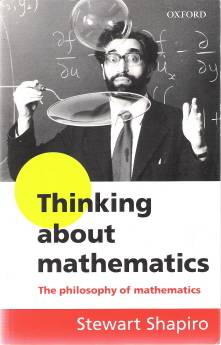
For my philosophy of mathematics course I am reading the book Thinking About Mathematics, by Stewart Shapiro. It is an excellent read and I highly recommend it. I hope to give this book a fuller treatment on this blog sometime over the summer.

In the meantime, I just finished reading Shapiro’s chapter on Formalism and he makes a telling editorial comment on the use of calculators in math education. Below are a few excerpts from the chapter (emphasis added).

The various philosophies that go by the name of ‘formalism’ pursue a claim that the essence of mathematics is the manipulation of characters. A list of the allowed characters and allowed rules all but exhausts what there is to say about a given branch of mathematics. According to the formalist then, mathematics is not, or need not be, about anything, or anything beyond typographical characters and rules for manipulating them.

For better or worse, much elementary arithmetic is taught as a series of blind techniques, with little or no indication of what the techniques do, or why they work. How many schoolteachers could explain the rules for long division, let alone the algorithm for taking square roots, in terms other than the execution of a routine?

The advent of calculators may increase the tendency toward formalism. If there is a question of justifying or making sense of, the workings of the calculator, it is for an engineer (or a physicist), not a teacher or student of elementary mathematics. Is there a real need to assign ‘meaning’ to the button-pushing?

We hear (or used to hear) complaints that calculators ruin the younger generation’s ability to think, or at least their ability to do mathematics. It seems to me that if the basic algorithms and routines are taught by rote, with no attempt to explain what they do or why they work, then the children might as well use calculators.

Food for thought.